

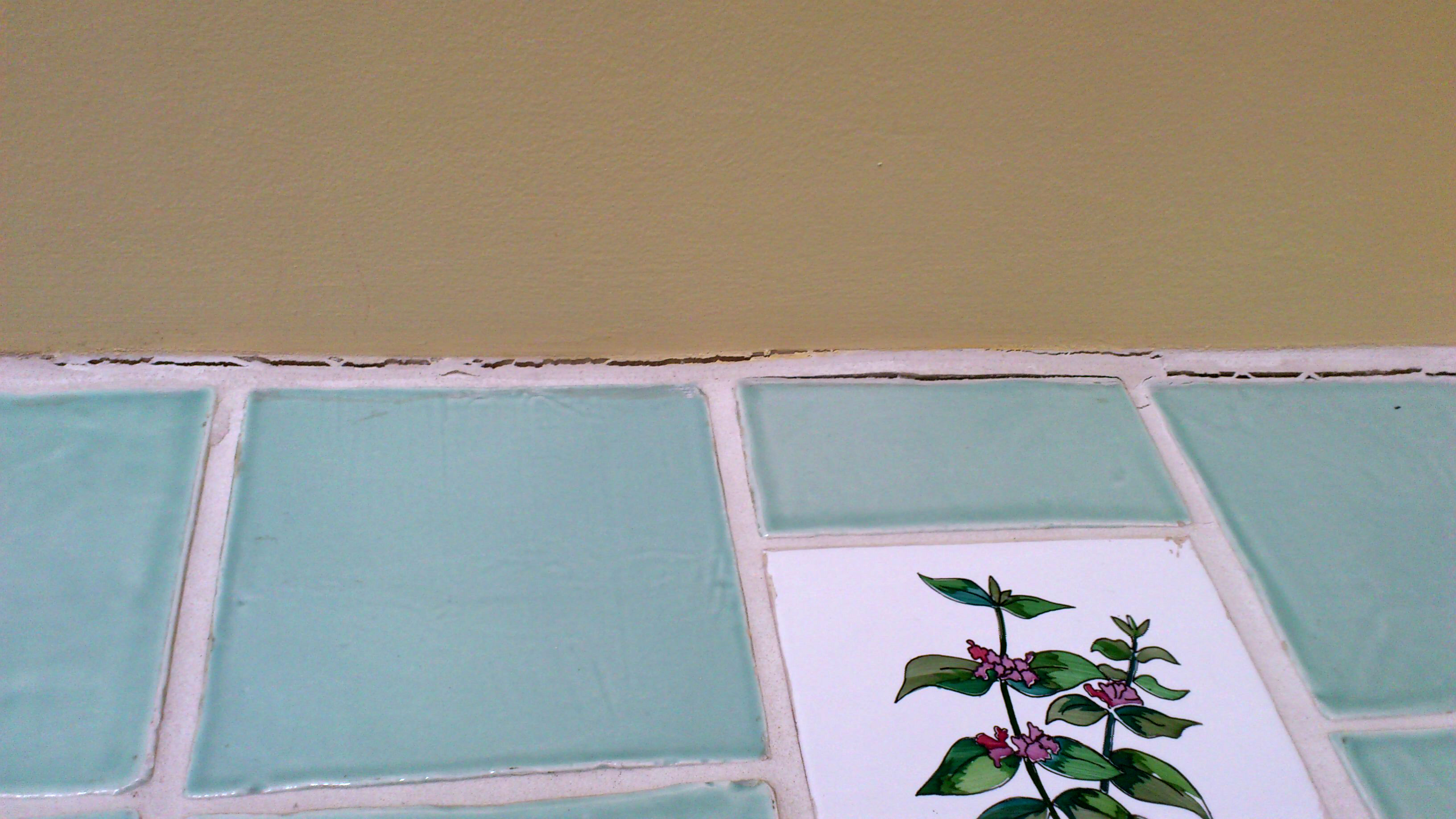
Most people (hopefully) in the tile industry are familiar with the requirement to include movement joints as detailed in the TCNA Handbook (section EJ 171).
However, the same section also notes that perimeter joints should be included any where tilework abuts restraining surfaces such as walls, dissimilar floors, curbs, columns, ceilings, or where backing surfaces differ.
What this means is that a joint filled with flexible sealant should be used instead of rigid grout in these areas.
This is very important because different materials have varying rates of thermal expansion and contraction.
Grout should not be used where these materials meet each other as these forces can transfer and cause cracking of grout and tiles. A flexible sealant provides an “escape valve” for these forces in order to prevent cracking.
Unfortunately, it is common to see grout installed directly adjacent to countertops, columns, transition strips, window frames, and cabinetry.
Not surprisingly, there is a high incidence of grout cracking in these areas. The vast majority could be prevented simply by following long-established installation guidelines that apply to all types of tile and natural stone.
If you are interested in more information, the TCNA has a great summary of all the reasons why grout can crack on their website.